Officers
President

Yu-Che Chen
University of Nebraska at Omaha, the School of Public Administration, Omaha, Nebraska
Yu-Che Chen, Ph.D., is Director and Professor of the School of Public Administration at the University of Nebraska at Omaha as well as the Director of the Digital Governance and Analytics Lab. Dr. Chen is a Fellow of the National Academy of Public Administration and the President of the Digital Government Society (DGS) (2026-2027). Dr. Chen received his Master of Public Affairs and Ph.D. in Public Policy from Indiana University-Bloomington. His current research interests are public governance of artificial intelligence, cyberinfrastructure governance, and collaborative digital governance. He has served as PI or Co-PI on NSF and other external grants totaling over $3.7 million. Dr. Chen has published four books on digital government and governance, including the most recent co-edited volume: The Oxford Handbook of AI Governance. In addition, he has published over 50 peer-reviewed journal articles, book chapters, and conference proceedings papers on digital government and governance. He chaired the Section on Science and Technology in Government (SSTIG) for the American Society for Public Administration (ASPA). He is Associate Editor of the Government Information Quarterly and the Digital Government: Research and Practice. He serves as the conference chair or co-chair for the International Digital Government Research (dg.o) 2024, 2025, and 2026.
President-elect

Tomasz Janowski
Gdańsk University of Technology, Poland
Tomasz Janowski is an Associate Professor at Gdańsk University of Technology, Poland, Guest Professor at University for Continuing Education Krems, Austria, and International Engagement Editor of Government Information Quarterly, where he previously served for ten years as Co-Editor-in-Chief. His work focuses on digital government, digital transformation, and sustainable development. He is the author or co-author of over 300 scholarly, policy, and project publications, recognized on Stanford/Elsevier World’s Top 2% Scientists List for both career-long and annual research impact. He brings nearly two decades of experience within the United Nations system, including as the founding head of UNU-EGOV. He has lectured to academic and policy audiences in over 60 countries and has led more than 40 projects worth over USD 9 million, funded among others by the Commonwealth Secretariat, the European Commission, the World Bank, EIT, IDB, OSCE, UNDP, UNESCO, and UNU. His professional portfolio spans five continents, encompassing work in conflict-affected countries (e.g., Afghanistan, Colombia), countries with special development needs (e.g., Cameroon, North Korea, Vanuatu), as well as regional (Latin America, the European Union) and interregional (EU-China) initiatives. His contributions to the development of the global digital government research and practice community include founding the ICEGOV conference series and coordinating ten ICEGOV conferences worldwide. He is the President-Elect of the Digital Government Society.
Past President

Jing Zhang
Professor, Information Management and Business Analytics, Academic Associate Dean, School of Management, Clark University
Jing Zhang is the Dean of the School of Business at Clark University and Professor of Information Management and Business Analytics. Her research focuses on the interaction between information technologies, management practices, and organization in the public sector. In addition, she studies the development of smart governance and smart city initiatives empowered by advanced information technology, and the information systems support for achieving sustainability goals. Her publications appear in European Journal of Information Systems, Government Information Quarterly, Public Performance and Management Review, among others. Her research was supported by the US National Science Foundation and Mosakowski Institute of Public Enterprise. Her publications received the best paper awards from major conferences. She is the recipient of the Senior Faculty Fellowship at Clark University. She has kept an active record of serving the communities of digital government research since 2007. She was the program co-chair for dg.o conference from 2012-2015, and an elected board member of the Digital Government Society in 2016-2020. She was elected to be the President-Elect in 2022, and served as the President 2024-2025.
Secretary

David Duenas-Cid
Kozminski University, Poland
David Duenas-Cid is an Associate Professor and Director of the Public Sector Data-Driven Technologies (Pub-Tech) Research Center at Kozminski University, Poland. Previously, he was an H2020 Marie Skłodowska-Curie Widening Fellow at Gdansk University of Technology, a Researcher at the Johan Skytte Institute of Political Studies at the University of Tartu, and a Postdoctoral Researcher at Tallinn University of Technology and the Universitat Rovira i Virgili.
His PhD focused on the politicization of social movements, and he obtained his Habilitation in Political Sciences from Adam Mickiewicz University (Poland) with the work Res Publica Digitalis: Society and Politics in the Digital Public Space. His research interests include Digital Sociology, Public Administration, Democracy, and Elections, with a particular focus on Electronic Democracy and Internet Voting. His current work examines the processes of trust and distrust in Internet voting.
He is Emeritus President of the Working Group on Digital Sociology at the International Sociological Association, General Chair of the E-Vote-ID Conference, Track Chair at the EGOV-CeDEM-ePArt Conference and at the Hawaii International Conference on System Sciences, and Academic Editor at Internet Policy Review. He has conducted lectures and research in Europe, Asia, Australia, and Latin America.
Treasurer

Loni Hagen
School of Information, University of South Florida, US
Dr. Loni Hagen is an Associate Professor of Data Science in the School of Information at the University of South Florida. She received her Ph.D. in Information Science from University at Albany, SUNY. Dr. Hagen is a Fulbright U.S. scholar to Japan in 2024-2025 to conduct research on human supervision of artificial intelligence at the University of Tsukuba. She has worked diverse law enforcement positions in Korea over ten years including an e-government specialist at the Headquarter of the Korean National Police Agency. Dr. Hagen has published her work in journals such as Government Information Quarterly, Journal of the American Society for Information Science and Technology (JASIST), Information Processing and Management, New Media and Society, Social Science Computer Review, ACM Digital Government: Research and Practice (DGOV), and Journal of Medical Internet Research (JMIR) Infodemeology. Her research was supported by the National Research Foundation of Korea and the Florida Center for Cybersecurity. She has served as a board member of the DGS, and conference Program Co-chair, a special interest group chair, and a jury for the best paper award for international conferences. She is a member of Digital Government Society (DGS) and American Society for Information Science and Technology (ASIS&T) since 2013.
Board Members

Manuel Pedro Rodríguez Bolivar
University of Granada, Spain
Manuel Pedro Rodríguez Bolívar is a professor at the University of Granada. His research is focused on smart governance, smart cities, open government, emerging technologies, and digital government, and he has co-authored over 75 papers in SSCI/JCR journals. He has been recognized as one of the most influential scholars worldwide during the past six years (2019-2024) and has been distinguished as a top scientist since 1996 by Stanford University. He has been honored with the prestigious Fellows Award 2025 by the Digital Government Society in recognition of his exceptional scholarly contributions to the field of digital government research. He is also a reviewer for over 65 international journals and conferences, an elected member of the Board of the FWO Review College Fundamental Research in Belgium, and an international reviewer of many calls for both national and international research projects in different countries (USA, Canada, Poland, Czechoslovakia, Belgium, Spain, European Science Foundation, etc.). He is an esteemed member of different digital government networks, a member of the Editorial Board of 12 international JCR-listed journals and serves as the Editor in Chief of the International Review of Administrative Sciences, Sustainability, Metrics, and the IJPADA. Additionally, he is the Series Editor for the PAIT book series
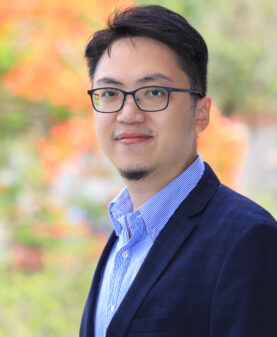
Hsien-Lee Tseng
National University of Tainan, Taiwan
Dr. Hsien-Lee Tseng is an Associate Professor in the Department of Public Administration and Management at the National University of Tainan, Taiwan. He concurrently serves as the Deputy Director of the Taiwan E-Governance Research Center (TEG) and as a National AI Policy Researcher for Taiwan’s AI Center of Excellence (AICoE). In these key roles, Dr. Tseng plays a vital part in formulating Taiwan’s sovereign AI strategies and data literacy frameworks. His research focuses on AI governance, open data, and digital transformation within the public sector. As a long-term active contributor to the Digital Government Society (dg.o) international conferences, he is deeply committed to bridging the gap between technical innovation and democratic governance. Through his work, Dr. Tseng continues to foster collaboration between the global academic community and policy practitioners to advance digital governance in Asia and beyond.

Anastasija Nikiforova
University of Tartu, Estonia
Anastasija Nikiforova is an Associate Professor of Applied AI and Information Systems at the University of Tartu (Estonia). Her research focuses on data and AI governance and digital transformation, with particular emphasis on the responsible adoption of emerging technologies, especially AI. She examines how (Gen)AI affects organizational processes and data governance, incl. data quality, human–AI collaboration, and delegation mechanisms, and their ethical, societal, and environmental implications, such as Responsible and Sustainable and Green AI, within the public sector and broader digital ecosystems. By exploring the interplay between technology, society, and policy, her work contributes to the resilience, sustainability, and inclusiveness of complex socio-technical systems and informs AI governance and decision-making. Anastasija serves on the editorial boards of several journals, including International Journal of Information Management, Government Information Quarterly, IEEE Transactions on Technology and Society, and Data & Policy. She is a track chair for major conferences in IS, AI, and public administration (e.g., IFIP EGOV-CEDEM-EPART, dg.o, AMCIS, HICSS) and contributes to workshops at ECAI, IJCAI, PRICAI, and CBI-EDOC. She collaborates with the KNOW Center, the European Commission’s Joint Research Centre, the Digital Statecraft Academy, the European Open Science Cloud, the Latvian Open Technology Association. She is actively involved in international research and professional communities, including IFIP WG 8.5 on ICT, the AIS Women’s Network College, Women in AI, and other professional communities.

Yue Ping Zheng
Sun Yat-sen University, Guangzhou, China
Dr. Yue Ping Zheng earned his Ph.D. from Rutgers University in the United States. Currently, he holds the position of Associate Professor and Ph.D. advisor at the School of Government at Sun Yat-sen University (SYSU). In addition to his teaching responsibilities, he serves as the Director of the Center for Digital Governance at SYSU and is an active member of the editorial boards for several Chinese academic journals. His research interests encompass digital governance, mobile government, and smart cities. He has published articles in journals such as Government Information Quarterly, Public Management Review, and Administration & Society, among others.

Edimara Mezzomo Luciano
Pontifical Catholic University of Rio Grande do Sul, Brazil
Edimara Mezzomo Luciano is a Professor (Full) in Strategy, Organizations and Society in the Management Graduate Program at the Pontifical Catholic University of Rio Grande do Sul, Brazil. She holds a PhD. from Federal University of Rio Grande do Sul (2004) and was a visiting researcher at London School of Economics and Political Science (2016). She heads the Governance and Digital Society Research Group. She has been an IT Governance and Architecture Minitrack Co-Chair at AMCIS and a Program Co-Chair of the main MIS Brazilian Conference since 2013. She is a Fellow of the Association for Information Systems and the Digital Government Society; is PUCRS’s partner representative and researcher of the ERASMUS+ Research Project Strengthening Governance Capacity for Smart Sustainable Cities; and is a coordinator of CAPES PrInt Research Project Macro and Microeconomics related to the Economic, Social, Human and Environmental Development and CAPES High Studies School on Collaborative Governance for the Digital Government Strategies Sustainability. Her research interests are related to Collaborative Governance, Digital Transformation, ICT Governance, Open Government, Smart Cities, and ICT4D focused on anti-corruption behavior.